
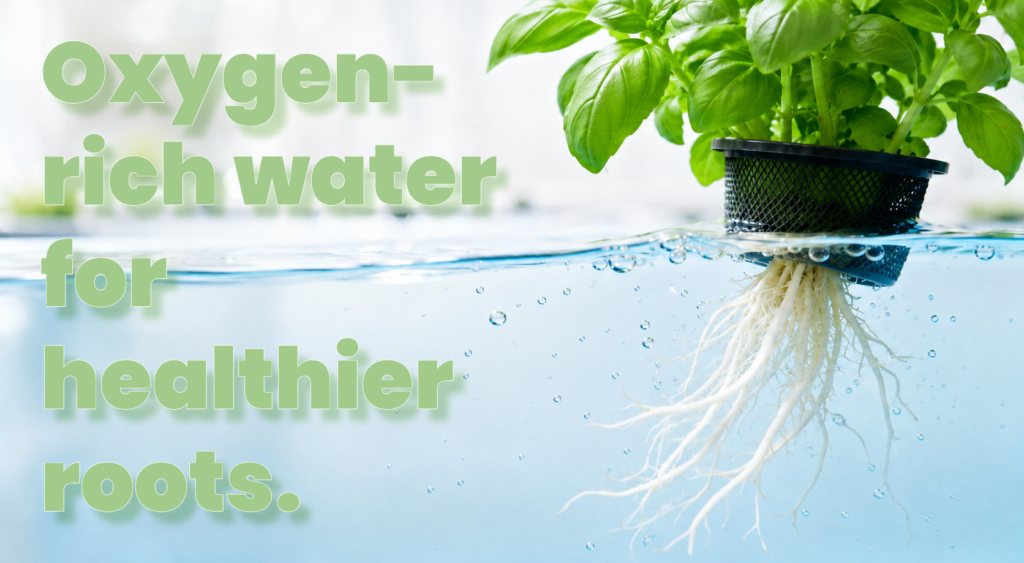
Nanobubble Irrigation: How Oxygen-Rich Water Supports Healthier Plant Growth
Plants need more than water.
They need the right balance of light, nutrients, temperature, minerals, microbial activity and oxygen. In many growing systems, oxygen is one of the most overlooked parts of the equation.
This is especially true at root level.
Roots do not only absorb water and nutrients. They also need oxygen to function properly. When oxygen levels around the roots are low, plants can struggle to absorb nutrients efficiently, root systems can weaken, and growth can become inconsistent.
This is where nanobubble irrigation becomes interesting.
Nanobubbles, sometimes referred to as ultrafine bubbles, are extremely small gas bubbles that can remain suspended in water for longer than ordinary bubbles. When oxygen is introduced into irrigation water in this form, it can help improve dissolved oxygen levels and support healthier root-zone conditions.
For OxyGrow, this is the core idea:
Don’t just water the plant. Deliver oxygen where the plant needs it most — at the roots.
What Are Nanobubbles?
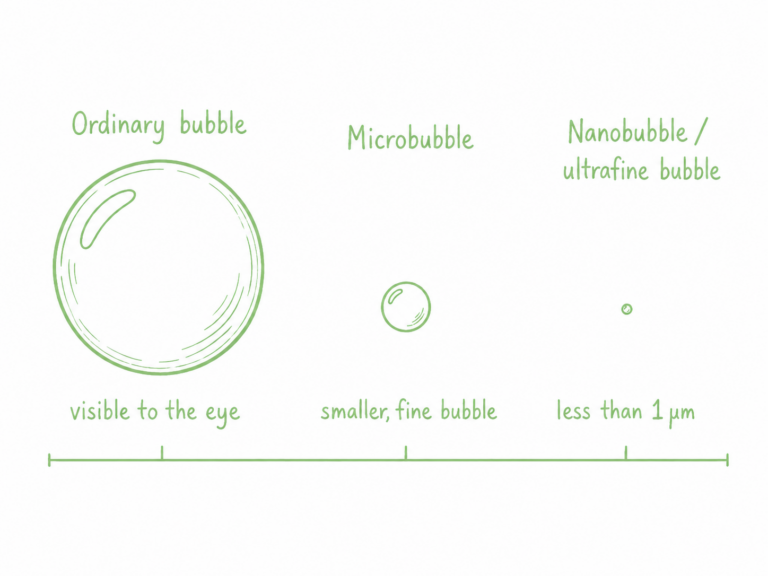
Nanobubbles are tiny gas bubbles suspended in liquid. In fine bubble terminology, ultrafine bubbles are generally defined as bubbles smaller than 1 micrometre (µm) in diameter. The ISO terminology for fine bubble technology includes definitions used internationally in this field. ISO
That is incredibly small.
Normal visible bubbles rise quickly through water and burst at the surface. This means much of the gas escapes before it can dissolve or remain useful in the water.
Nanobubbles behave differently.
Because of their extremely small size, they can remain suspended for longer and provide a larger contact area between gas and water. Research and reviews into nanobubble technology have highlighted their distinctive properties, including small size, surface charge and improved gas transfer behaviour. MDPI
In farming terms, this matters because oxygen needs time and contact with water to become useful in the root zone.
Why Oxygen Matters in the Root Zone
Most people associate plant growth with sunlight and fertiliser, but oxygen is just as important.
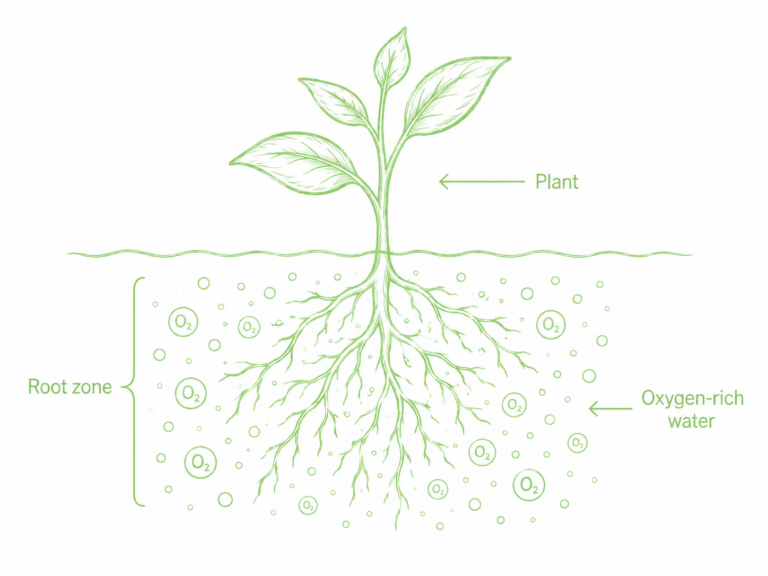
Roots need oxygen for respiration. This process helps plants generate the energy needed for active nutrient uptake and healthy root function. When root zones become oxygen-poor, especially in overwatered soil, compacted growing media or poorly aerated hydroponic systems, plants can become stressed.
In hydroponic and controlled growing systems, dissolved oxygen is particularly important because roots are often in direct contact with nutrient solution. If oxygen levels drop, the plant’s ability to function efficiently can suffer.
The Food and Agriculture Organization notes that irrigation water quality is a key factor in crop production, and water quality can influence growth, soil conditions and long-term productivity.
Oxygen is not the only factor in water quality, but it is one of the most important for root-zone performance.
What Is Dissolved Oxygen?
Dissolved oxygen, often shortened to DO, refers to oxygen that is present in water in a usable dissolved form.
The higher the dissolved oxygen level, the more oxygen is available within the water. In farming and hydroponics, this can be especially valuable because roots are constantly interacting with irrigation water or nutrient solution.
Traditional aeration methods use air stones, pumps or surface agitation to add oxygen to water. These can help, but they often produce larger bubbles that quickly rise and escape.
Nanobubble systems aim to improve this process by introducing oxygen in a much finer form. Because the bubbles are so small, they can remain suspended longer, improving the opportunity for oxygen to stay available within the water.
Recent research into oxygen nanobubbles in agriculture has reported potential benefits including improved dissolved oxygen, root architecture, nitrogen use efficiency and water use efficiency under studied conditions.
That is why nanobubble irrigation is gaining attention in modern farming.
Why Ordinary Aeration Is Not Always Enough
If you have ever seen an air stone in a fish tank or hydroponic reservoir, you already understand basic aeration.
Air is pumped into water. Bubbles rise. Oxygen transfers into the water.
The problem is efficiency.
Large bubbles move quickly to the surface. Much of the oxygen escapes into the air before it can dissolve into the water. Smaller bubbles are generally more efficient because they provide more surface area and remain in contact with the water for longer.
Nanobubbles take this idea further.
Their extremely small size allows them to behave differently from ordinary bubbles. Research into nanobubble irrigation has found that oxygen, carbon dioxide and nitrogen nanobubbles can remain stable in irrigation solutions, with moderate oxygen nanobubble treatment showing improved germination, leaf growth, biomass and water savings in a controlled study.
This does not mean every crop will respond in exactly the same way, but it does show why the technology is worth taking seriously.
How Nanobubble Irrigation Supports Plant Growth
Nanobubble irrigation is not magic. It works by improving one of the most important inputs in the growing environment: oxygen availability.
When irrigation water carries more stable oxygen, several things may improve.
1. Healthier Root Environments
Roots perform best when they have access to oxygen. Oxygen-rich water can help support a healthier root-zone environment, especially in systems where roots are regularly saturated.
In hydroponics, this is particularly important because oxygen availability depends heavily on water management. In soil, oxygen availability can be affected by compaction, overwatering and drainage.
Oxygen nanobubbles may help deliver oxygen more efficiently into irrigation water, improving root-zone conditions under suitable growing setups.
2. Improved Nutrient Uptake
Nutrients do not simply enter plants automatically. Roots require energy to absorb many essential nutrients.
When oxygen is limited, root function can be restricted. When oxygen availability improves, roots may function more efficiently, helping the plant make better use of available nutrients.
A 2025 review on oxygenated nanobubbles describes research showing improvements in root distribution, root architecture, nitrogen use efficiency and water use efficiency in greenhouse settings.
This supports one of the main reasons growers are interested in oxygenated irrigation water:
Better water can help plants use nutrients more effectively.
3. More Efficient Water Use
Water efficiency is becoming more important for farmers everywhere.
South African growers know this especially well. Periods of water restriction, higher input costs and pressure on irrigation systems all make efficiency more important.
Research into precision nanobubble irrigation reported that moderate oxygen nanobubble treatment improved plant growth outcomes and water savings in studied conditions.
This does not remove the need for good irrigation design, crop monitoring or water management. But it suggests that oxygenated nanobubble irrigation may become part of smarter, more efficient farming systems.
4. Stronger Controlled Growing Systems
Hydroponic, greenhouse and tunnel systems depend on consistency.
In these systems, the grower is already managing light, temperature, nutrients, pH, EC and irrigation timing. Oxygenated water adds another layer of control.
OxyGrow fits naturally into this environment because the technology supports a more engineered approach to irrigation water.
Instead of treating water as a passive carrier for fertiliser, OxyGrow treats water as an active part of crop performance.
Where OxyGrow Fits In
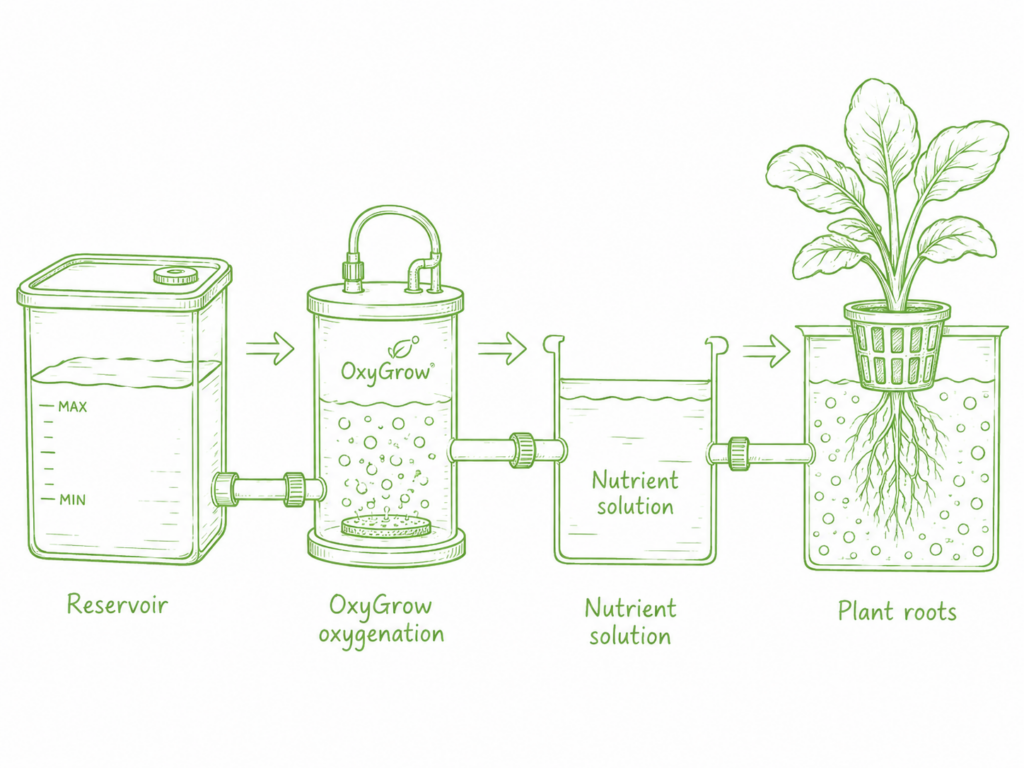
OxyGrow is built around the idea that irrigation water should do more than simply move nutrients from the tank to the roots.
The system is designed to enhance water before it reaches the plant by increasing oxygen availability through fine-bubble oxygenation.
The goal is simple:
Create better irrigation water for healthier, more productive plants.
OxyGrow is especially relevant for:
- hydroponic farms
- greenhouse growers
- tunnel farming
- nurseries
- high-value crops
- controlled environment agriculture
- farms seeking better irrigation efficiency
It can be positioned as a technology for growers who already understand that small improvements in water quality, root-zone health and nutrient uptake can have a meaningful effect on crop performance.
OxyGrow vs Traditional Irrigation
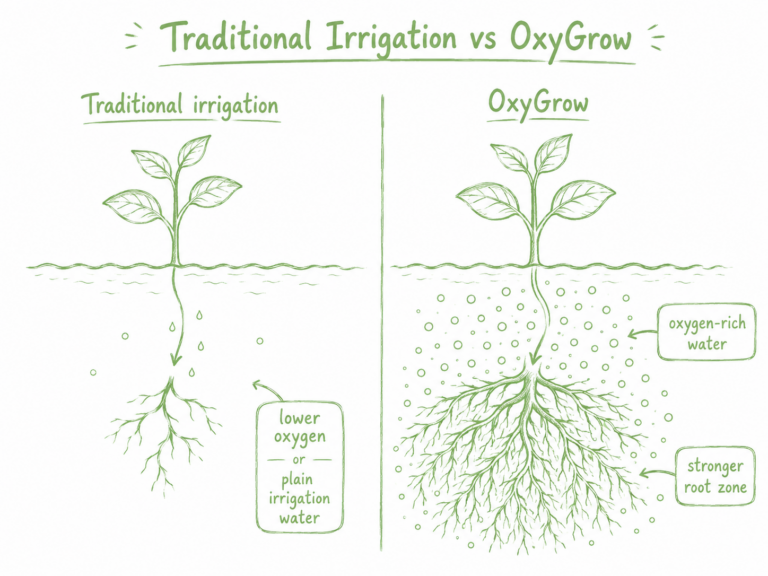
Traditional irrigation focuses on delivering enough water.
OxyGrow focuses on improving the quality of that water before it reaches the plant.
That difference matters.
Traditional irrigation asks:
“How much water does the crop need?”
OxyGrow asks:
“What can this water do for the crop?”
This is the shift.
OxyGrow is not simply about irrigation volume. It is about irrigation performance.
OxyGrow vs Standard Aeration
Standard aeration can add oxygen to water, but much of the oxygen may escape quickly depending on bubble size, water movement and system design.
OxyGrow’s fine-bubble oxygenation approach is designed to improve oxygen transfer and increase the usefulness of oxygen within the irrigation water.
This makes it particularly interesting for growers who already use reservoirs, nutrient tanks or recirculating systems and want to improve dissolved oxygen delivery.
Why This Matters in South African Farming
South African agriculture faces several challenges:
- water availability
- irrigation efficiency
- soil and water quality concerns
- rising input costs
- pressure to improve yield consistency
- climate variability
The FAO’s guidance on agricultural water quality highlights that irrigation water quality can affect soil conditions and crop production, especially when salts and other water quality factors accumulate over time.
For South African growers, this reinforces an important point:
Water quality is not a side issue — it is a production issue.
OxyGrow provides a way to improve one important part of water quality: oxygen availability.
A Better Way to Think About Irrigation Water
Many growers already spend heavily on fertiliser, nutrients and crop protection.
But if the water delivering those inputs is not performing well, some of that investment may be underused.
Oxygen-rich irrigation water can help create better conditions for root function. Better root function can support better nutrient uptake. Better nutrient uptake can support more consistent growth.
This is why OxyGrow’s message is powerful:
Better oxygen. Better roots. Better growth.
Does Nanobubble Irrigation Replace Good Farming Practice?
No.
Nanobubble irrigation should not be presented as a replacement for good crop management.
Growers still need to manage:
- pH
- EC
- nutrient balance
- irrigation frequency
- drainage
- root-zone temperature
- disease pressure
- water testing
OxyGrow should be positioned as a performance-enhancing technology that supports good farming practice, not as a miracle fix.
That gives the brand more credibility.
The strongest message is:
OxyGrow helps growers improve the water side of the crop performance equation.
Simple Summary: Why Nanobubbles Matter for Farming
Nanobubbles matter because they help oxygen remain in water longer and improve oxygen delivery.
For plants, that can mean:
- better root-zone oxygen availability
- stronger root function
- improved nutrient uptake potential
- more efficient irrigation water
- better support for controlled growing systems
For growers, the benefit is practical:
OxyGrow helps turn irrigation water into a more active tool for plant performance.
Final Takeaway
Nanobubble irrigation is exciting because it changes how we think about water.
Instead of viewing irrigation water as a simple delivery method, it allows growers to treat water as an active part of plant performance.
By improving oxygen availability in the water, OxyGrow supports healthier root-zone conditions, better nutrient uptake potential and more efficient crop production systems.
For growers looking to improve consistency and performance, OxyGrow offers a smarter way to irrigate:
Oxygen-rich water, delivered where plants need it most.
Contact us or view which model is right for your grow.